Building muscle takes time, consistency, and a well-planned approach to exercise and nutrition. If you’re wondering how long does it take to build muscle, most people can notice strength improvements within a few weeks, while visible muscle growth often takes around 8–12 weeks or longer. The exact timeline depends on your training experience, workout routine, nutrition, sleep, and genetics.
For busy adults in San Rafael and throughout Marin County, building muscle doesn’t require spending hours in the gym every day. With a structured strength training program and the right support, you can make steady progress while balancing work, family, and other responsibilities.
How Long Does It Take to Build Muscle?
Not everyone develops muscle at the same rate. Understanding the factors that influence muscle growth can help you set realistic expectations and make better training decisions.
1. Your Training Experience
Beginners often experience relatively rapid strength improvements during their first few months of resistance training. Their bodies are learning to perform movements efficiently while adapting to the demands of exercise.
Experienced lifters may need more carefully planned workouts to continue progressing. If your results have stalled, reviewing your exercise selection, training volume, and progression can help you identify what needs to change.
For practical advice on accelerating your progress safely, read our guide on how to build muscle fast.
2. Your Workout Routine
A consistent strength training program is essential for muscle development. Training should challenge your muscles while allowing enough recovery between sessions.
Most adults can build muscle by strength training three or four days per week, depending on their experience, schedule, and ability to recover. Your routine should include exercises for all major muscle groups rather than focusing exclusively on one area.
For example, men who want to develop stronger legs and glutes can benefit from squats, lunges, hip thrusts, and other targeted movements. Our guide to glute workouts for men offers additional exercise ideas for lower-body development.
3. Nutrition and Protein Intake
Your body needs enough energy and nutrients to repair muscle tissue and support growth. Even a well-designed workout program may produce limited results if you’re consistently under-eating or not getting enough protein.
Include protein-rich foods such as eggs, fish, chicken, lean meat, Greek yogurt, beans, and tofu. Pair these with whole grains, fruits, vegetables, and healthy fats to support overall health and workout performance.
If building muscle is your main goal, eating enough calories to support training can help. The ideal amount depends on your current body composition, activity level, and goals.
4. Sleep and Recovery
Muscle growth doesn’t happen only while you’re lifting weights. Your body needs time to recover and adapt between workouts.
Aim for seven to nine hours of sleep each night when possible. Allow adequate recovery between demanding sessions, and avoid repeatedly training sore muscles at an intensity that prevents proper movement or performance.
5. Age and Individual Differences
Age, genetics, hormones, and previous training experience can influence how quickly you gain muscle. Adults in their 40s, 50s, and beyond can still improve strength and build muscle, although their training and recovery needs may differ.
The most effective approach is to focus on your own progress rather than comparing your results with someone else’s.
What Factors Affect How Quickly You Build Muscle?
Muscle growth happens gradually as your body adapts to resistance training. When you challenge your muscles through exercises such as squats, presses, rows, and deadlifts, your body repairs and adapts to the training stimulus, helping muscle fibers grow over time.
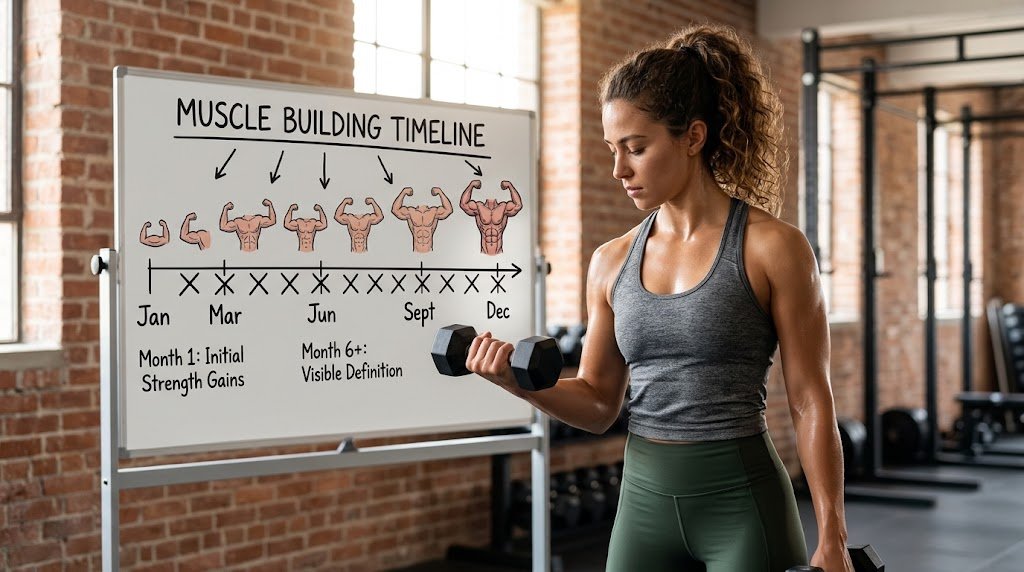
Here’s a general timeline of what you may experience:
Weeks 1–4: You may notice improved coordination, exercise technique, and strength as your body adapts to new movements.
Weeks 4–8: Your workouts may feel easier, and you may be able to lift heavier weights or complete more repetitions.
Weeks 8–12: Some people begin noticing visible changes in muscle size, definition, and body composition.
Months 3–6: Consistent training and proper nutrition may produce more noticeable changes in strength and muscle development.
Six months and beyond: Continued training can lead to more substantial changes in your physique, although progress typically slows as you gain experience.
These timeframes are estimates, not guarantees. Your results will depend on how consistently you train, how well you recover, and whether your program supports your specific goals.
How to Build Muscle More Effectively
If you want to see progress without wasting time on ineffective workouts, follow these practical steps.
Step 1: Follow a Structured Strength Training Plan
Choose a program that fits your fitness level and schedule. Include compound movements such as squats, rows, presses, and hip hinges, along with accessory exercises that target specific muscles.
Start with manageable resistance and prioritize correct technique. Increase the difficulty gradually as your strength improves.
Step 2: Use Progressive Overload
Progressive overload means gradually increasing the challenge placed on your muscles. You can do this by lifting slightly heavier weights, completing additional repetitions, or improving your control and range of motion.
Record your workouts so you can see whether your performance is improving. Avoid increasing the weight at the expense of good form.
Step 3: Eat to Support Your Goals
Build balanced meals around protein, carbohydrates, healthy fats, and nutrient-rich foods. If you want to gain muscle while reducing body fat, your calorie intake and training plan should reflect that combined goal.
For additional guidance on managing body composition, explore our article on effective weight loss strategies.
Step 4: Track Your Progress
Don’t rely on the mirror or scale alone to judge your results. Track several indicators, including:
The weights and repetitions you complete
Changes in body measurements
Progress photos taken under similar conditions
Improvements in exercise technique
Energy levels and recovery
Review your progress every four to eight weeks. This gives you a clearer picture of your results and helps you decide whether your program needs adjustment.
Step 5: Get Professional Guidance
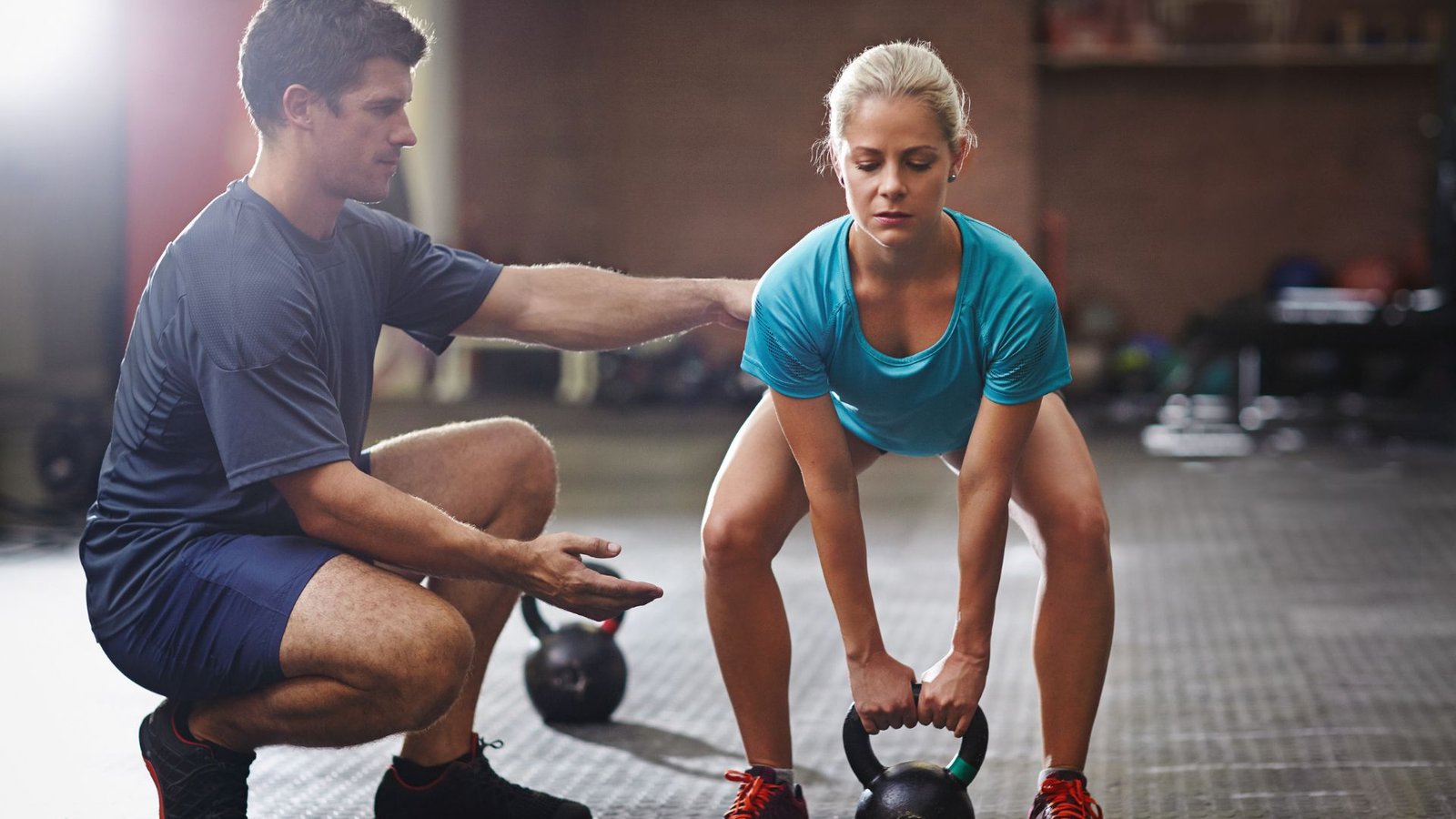
A personal trainer can help you establish realistic goals, choose appropriate exercises, and build a program around your current abilities. Coaching can be particularly useful if you’re new to strength training, have limited time, or have stopped making progress.
If getting to a gym regularly is difficult, online personal training can offer a flexible way to follow a personalized workout plan and receive ongoing coaching, depending on the services included.
Common Mistakes That Can Slow Muscle Growth
Several habits can make building muscle harder than necessary.
Changing workouts too frequently: Give your program enough time to work before making unnecessary changes.
Lifting weights that are too heavy: Poor technique can limit progress and increase injury risk.
Not eating enough: Insufficient energy and protein can make recovery and muscle growth more difficult.
Ignoring rest days: Your body needs recovery time to adapt to training.
Expecting immediate results: Meaningful muscle growth takes consistent effort over weeks and months.
Focus on sustainable habits instead of trying to achieve dramatic changes in a short period.
Frequently Asked Questions
Can I build muscle in 30 days?
You can improve strength and exercise technique within 30 days, particularly if you're new to training. Visible muscle growth may begin during this period, but more noticeable changes generally require several months of consistent exercise and appropriate nutrition.
How many days a week should I train to build muscle?
Three or four strength training sessions per week can work well for many adults. The best schedule depends on your experience, workout intensity, recovery, and availability.
Do I need supplements to build muscle?
No. Supplements aren't required to build muscle. A balanced diet with adequate protein and calories, consistent strength training, and sufficient sleep are the main priorities. Supplements may be useful in certain situations, but they cannot replace these fundamentals.
Can I build muscle while losing fat?
Yes. Some people, particularly beginners and those returning to training, can build muscle while losing fat. This process is often called body recomposition. It requires appropriate resistance training, sufficient protein, and nutrition tailored to your goals.
Is personal training worth it for muscle building?
Personal training can help you learn proper technique, follow a structured program, and track progress. It may be especially helpful if you're unsure how to train effectively or need accountability to stay consistent.
Conclusion: Build Muscle With Consistency and a Plan
So, how long does it take to build muscle? You may notice strength improvements within a few weeks, while visible changes often take 8–12 weeks or longer. More substantial muscle development usually requires several months of consistent training, adequate nutrition, and proper recovery.
The key is to follow a structured program, gradually challenge your muscles, eat well, and give your body enough time to recover. With realistic expectations and a consistent approach, you can build strength and muscle while supporting your long-term health.
Ready to Build Muscle With San Rafael Personal Training?
You don’t have to figure out your fitness routine alone. San Rafael Personal Training can help you work toward your muscle-building goals with a personalized approach that considers your fitness level, schedule, and desired results.
Whether you’re starting strength training for the first time or trying to overcome a plateau, the right guidance can help you train with greater confidence and consistency.
Contact San Rafael Personal Training today to learn more about personalized coaching and take the next step toward becoming stronger and healthier.