
Hiring a personal trainer gives you more than a workout plan. It gives you structure, accountability, safer technique, and a clearer path toward goals that can otherwise feel vague or overwhelming. If you have ever searched “What are the benefits of hiring a personal trainer?” the short answer is this: a good trainer helps you train with purpose instead of guessing.
Whether you are new to exercise, returning after time away, or trying to break through a plateau, the right support can make fitness feel more manageable. The benefits of hiring a personal trainer are especially noticeable when you want a plan that fits your body, schedule, experience level, and motivation style.
Why hire a personal trainer?
A personal trainer helps you turn broad fitness goals into specific, realistic actions. Instead of walking into a gym unsure which machines to use or repeating the same routine every week, you get guidance on what to do, how to do it, and how to progress over time. That combination of planning, coaching, and feedback is what makes personal training valuable for many people.
The biggest personal trainer advantages often show up in the details. A trainer can adjust your form, choose exercises that match your current ability, help you avoid doing too much too soon, and keep your sessions focused. This can save time, reduce frustration, and make your workouts feel more productive.
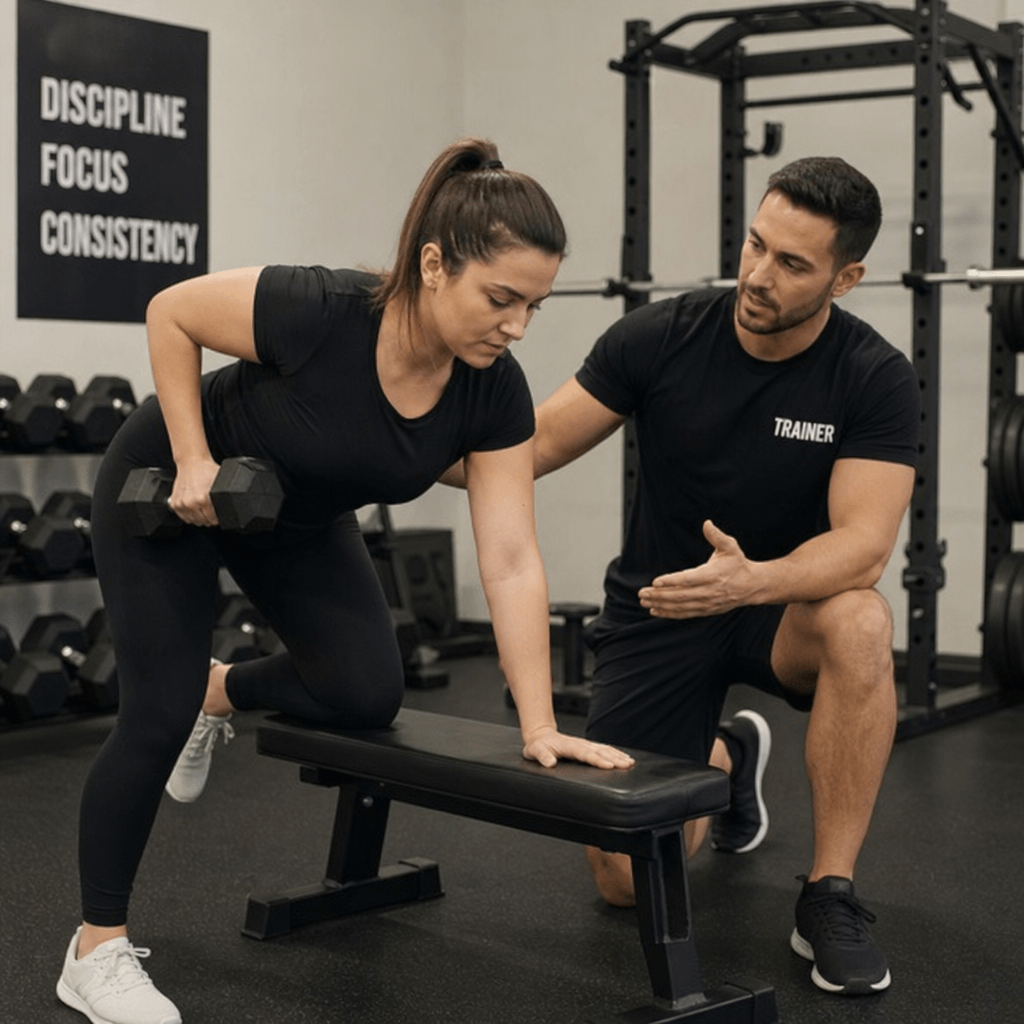
A personalized plan replaces guesswork
One of the main coaching advantages of working with a trainer is personalization. Online workouts and fitness apps can be useful, but they usually cannot see how you move, how your energy changes, or whether an exercise feels wrong for your body. A trainer can start with your current fitness level and build from there.
A personalized plan may consider your goals, equipment access, training history, limitations, preferences, and weekly schedule. For example, someone training for general strength may need a different plan than someone focused on weight management, mobility, endurance, or returning to exercise after a long break.
This matters because consistency is easier when the plan feels realistic. A routine that looks impressive on paper but does not fit your life is unlikely to last. A trainer can help you choose a sustainable pace, then gradually increase difficulty as your strength, confidence, and capacity improve.
Better technique can improve safety and confidence
Many people avoid strength training or gym equipment because they are afraid of doing something incorrectly. That fear is understandable. Poor technique can make exercises less effective and may increase the risk of discomfort or injury, especially when loads get heavier or fatigue sets in.
A personal trainer can teach proper form in real time. They can show you how to brace, breathe, control the movement, adjust your range of motion, and recognize the difference between healthy effort and warning signs. Small corrections, such as changing foot position during a squat or shoulder position during a press, can make an exercise feel completely different.
This hands-on feedback builds confidence. When you understand why you are doing an exercise and how it should feel, you are less dependent on guesswork. Over time, that confidence can carry into solo workouts, active hobbies, and everyday movements like lifting groceries, climbing stairs, or carrying luggage.
Accountability makes consistency easier
Motivation naturally rises and falls. A personal trainer cannot do the workout for you, but they can help you show up when your motivation is low. Scheduled sessions create a commitment, and that commitment can be powerful when life gets busy.
Accountability is not just about someone checking whether you attended a session. It is also about having someone track your progress, notice patterns, and help you reset when things get off course. If you miss workouts, feel stuck, or lose momentum, a trainer can help you adjust the plan instead of abandoning it.
Useful accountability may include:
Scheduled training sessions that make exercise part of your calendar.
Progress tracking through weights, reps, endurance, mobility, or habit consistency.
Check-ins that help you reflect on energy, recovery, and obstacles.
Adjustments when your routine is too easy, too hard, or no longer fits your schedule.
Encouragement that keeps the process focused without relying on pressure or guilt.
For many people, this support is the difference between restarting every few months and building a routine that actually continues
Progress becomes easier to measure
Fitness progress is not always obvious day to day. You might feel like nothing is changing because the scale is not moving, even though you are getting stronger, recovering faster, sleeping better, or moving with less stiffness. A trainer can help you identify meaningful progress beyond one narrow number.
Depending on your goals, progress might include lifting heavier weights, completing more repetitions with good form, improving balance, increasing walking stamina, reducing rest time between sets, or feeling more comfortable in the gym. These markers give you evidence that your effort is working.
A trainer can also help you avoid random program changes. It is tempting to switch workouts constantly when you do not see instant results. A coach can explain when to stay consistent, when to progress, and when to change the plan. That clarity helps you avoid both boredom and unnecessary overtraining.
Training can be adapted to your lifestyle
A good fitness plan should support your life, not take it over. One of the underrated benefits of hiring a personal trainer is learning how to train effectively within your real constraints. You may only have a few days per week, limited equipment, a demanding job, family responsibilities, or changing energy levels.
A trainer can help you make the most of the time you do have. If you have 30 minutes, the session can be focused. If you travel, your trainer may suggest bodyweight or hotel-gym options. If your week is unusually stressful, the intensity can be adjusted so you still move without pushing beyond what your body can handle.
This flexible approach helps exercise become part of normal life. Instead of seeing fitness as an all-or-nothing project, you learn how to maintain momentum through busy weeks, low-energy days, and imperfect circumstances.
Trainers can support motivation without relying on hype
Motivation is often misunderstood. Loud music and intense slogans might help for one workout, but long-term motivation usually comes from feeling capable, seeing progress, and understanding the purpose behind the plan. A personal trainer can help create those conditions.
The best coaching advantages are not just technical. They include emotional and practical support. A trainer can help you set realistic goals, celebrate small wins, reframe setbacks, and stop comparing your progress to someone else’s. That kind of guidance can make training feel less intimidating and more empowering.
This is especially helpful if you have had frustrating fitness experiences before. A trainer can help you rebuild trust in the process by starting where you are and progressing at a pace that makes sense.
How to get the most from personal training
Hiring a trainer is not a magic shortcut. The value comes from active participation, honest communication, and consistent effort. The more clearly you share your goals, preferences, and challenges, the easier it is for your trainer to support you well.
Use this checklist to make your training experience more effective:
Clarify your main goal. Decide whether you want strength, fat loss support, mobility, endurance, confidence, consistency, or a mix.
Be honest about your schedule. A realistic plan beats an ideal plan you cannot follow.
Share discomfort early. Exercises can often be modified, but your trainer needs feedback.
Track more than weight. Notice energy, strength, confidence, sleep, stamina, and mood.
Ask questions. Understanding the “why” behind your workouts helps you become more independent.
Practice outside sessions. Progress usually depends on what you do between appointments too.
A strong trainer-client relationship works best as a partnership. Your trainer brings expertise and structure; you bring effort, feedback, and consistency.
FAQ
How often should I see a personal trainer?
It depends on your goals, budget, experience, and schedule. Some people benefit from multiple sessions per week, while others use occasional sessions for form checks, programming, and accountability. The best frequency is one you can sustain consistently.
Is a personal trainer only for beginners?
No. Beginners often benefit from learning the basics, but experienced exercisers can also use a trainer to improve technique, add structure, work through plateaus, or prepare for specific goals.
Can a trainer help if I feel intimidated at the gym?
Yes. A trainer can introduce equipment, explain gym etiquette, teach safe movement patterns, and help you build confidence in a space that may feel unfamiliar at first.
What should I look for in a personal trainer?
Look for someone who listens well, explains clearly, adapts exercises to your needs, respects your limits, and creates a plan that feels challenging but realistic. Credentials, experience, communication style, and personality fit all matter.
Will I still need to work out on my own?
Possibly. Many people make better progress when they combine trainer-led sessions with independent workouts, walking, mobility work, or other healthy habits. Your trainer can help you decide what makes sense.
Take the next step
If you are tired of guessing your way through workouts, consider booking a session with a qualified personal trainer. Use the first conversation to discuss your goals, current routine, past challenges, and what kind of support helps you stay consistent.
You do not need to be fit before you start. The point of hiring a trainer is to meet you where you are, create a plan that fits, and help you move forward with more confidence. Start with one clear goal, ask questions, and give yourself the benefit of expert guidance.
The takeaway
The benefits of hiring a personal trainer go beyond exercise selection. A trainer can provide structure, safer technique, accountability, motivation, and a plan that adapts to your real life. If you want to train with more confidence and less confusion, personal training can be a practical investment in your long-term health and consistency.