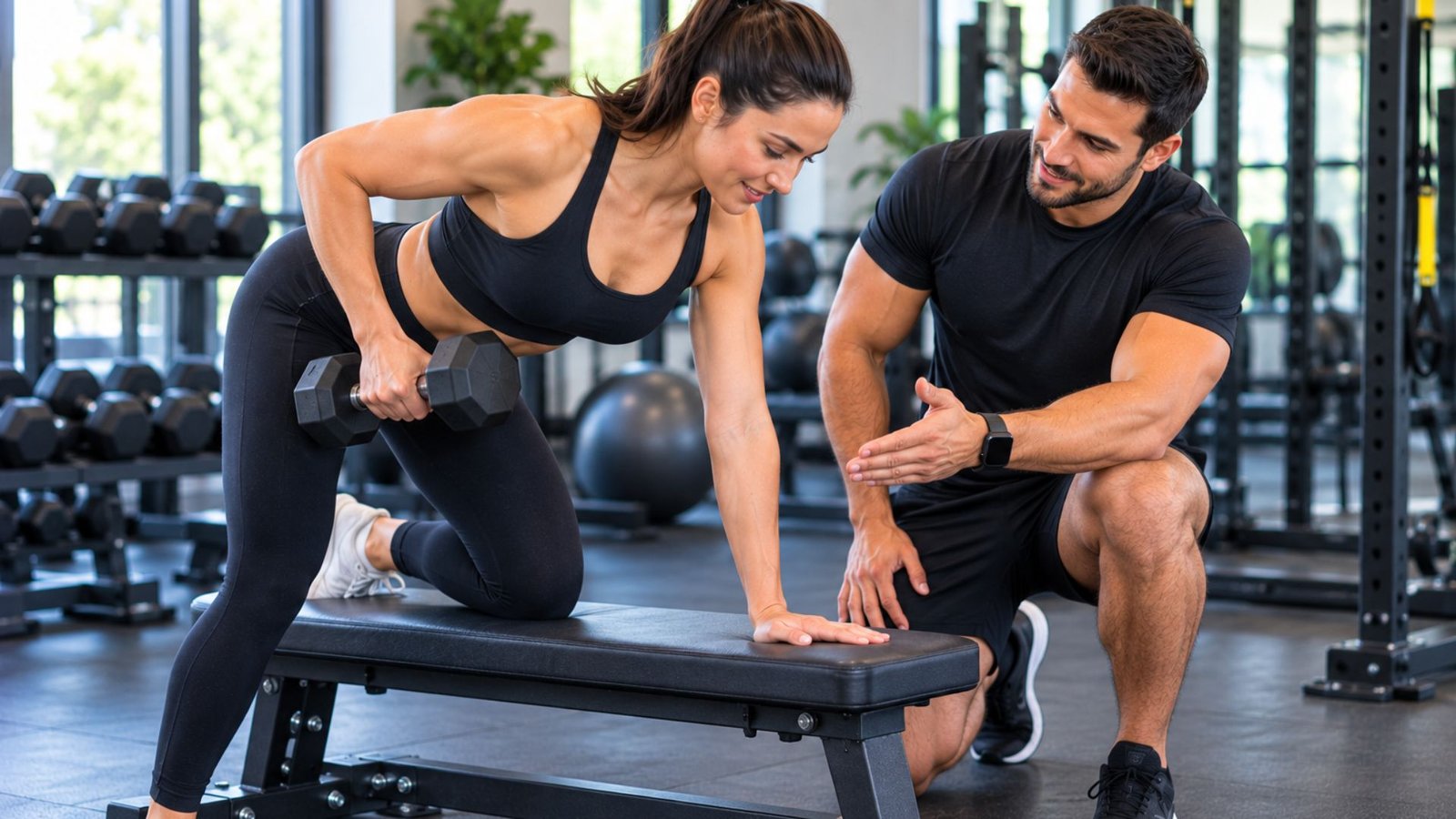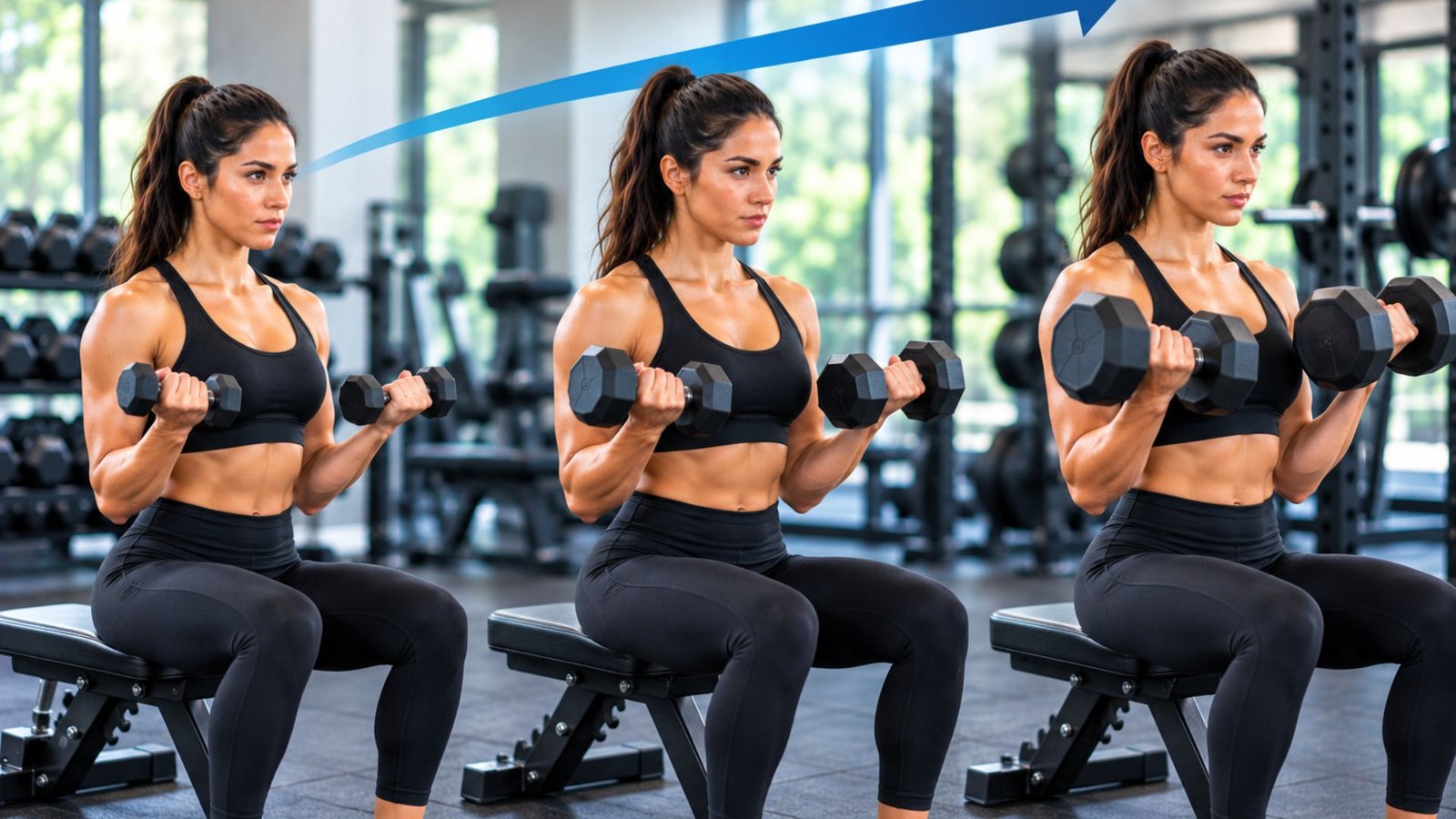
Yes, you can build muscle at home if you train with enough resistance, progress your workouts over time, eat enough protein and calories, and recover well. A gym can be useful, but it is not mandatory. With smart resistance training, bodyweight exercises, household equipment, and consistency, your home can become a practical place to get stronger and add muscle.
What does it take to gain muscle outside the gym?
Building muscle outside the gym takes the same fundamentals as building muscle anywhere else: tension, progressive overload, enough training volume, good technique, and recovery. Your muscles do not know whether resistance comes from a barbell, a dumbbell, a backpack, a resistance band, or your own body weight. They respond to being challenged repeatedly in a way that is hard enough to create adaptation.
The biggest difference at home is planning. In a gym, increasing resistance is often as simple as moving a pin or adding plates. At home, you may need to be more creative: slowing down reps, adding pauses, using single-leg variations, increasing range of motion, wearing a loaded backpack, or using bands. These methods can make simple movements surprisingly effective.
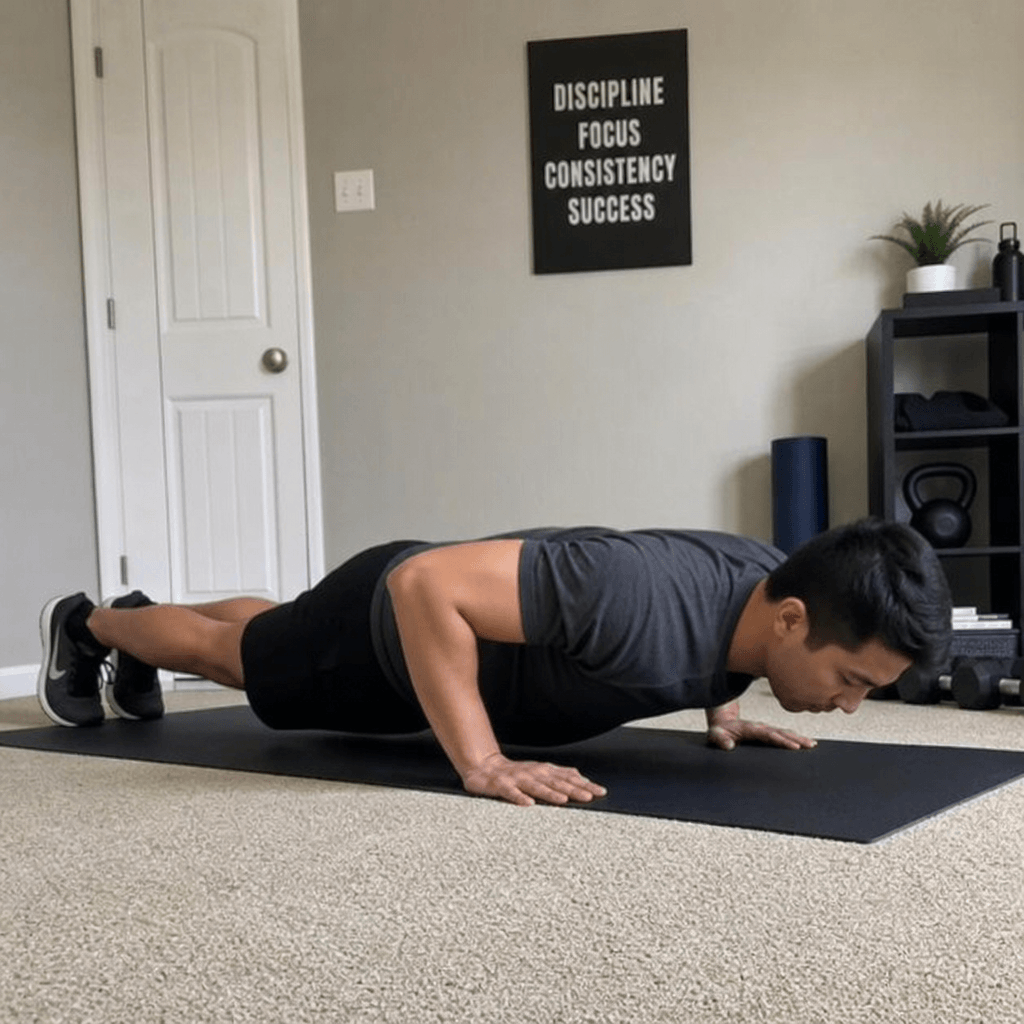
If your goal is to build muscle at home, focus less on copying gym workouts and more on applying the principles behind them. A basic push-up can become a serious chest, shoulder, and triceps exercise when you elevate your feet, slow the lowering phase, pause near the bottom, or progress toward harder variations.
The basic rules of home muscle growth
Muscle growth is not random. You do not need a perfect program, but you do need a repeatable system that gives your body a reason to adapt. The following rules apply whether you train in a garage, bedroom, living room, or backyard.
Train close enough to challenge
For most muscle-building sets, the final few reps should feel difficult while still allowing good form. You do not need to collapse after every set, but you should not finish every set feeling like you could have done ten more reps. If a movement is too easy, your body has little reason to build more muscle.
A useful guide is to stop with about one to three reps left “in the tank” on most working sets. Beginners can stay slightly farther from failure while learning technique. More experienced lifters may occasionally push a safe bodyweight or band exercise closer to failure, especially for smaller muscle groups.
Progress the workout over time
Doing the same easy workout forever will mostly maintain what you have. To gain muscle, you need progressive overload, which means gradually increasing the challenge. At home, this can happen in several ways:
Add more reps while keeping form clean.
Add another set for an exercise.
Use a harder variation, such as moving from knee push-ups to full push-ups.
Slow the lowering phase to increase time under tension.
Add a pause in the hardest position.
Reduce rest slightly without turning the workout into pure cardio.
Add load with a backpack, resistance band, water jugs, or adjustable dumbbells.
The key is not to make every workout brutally harder. It is to make training slightly more demanding over weeks and months.
Train each major muscle group
A balanced home routine should train your legs, hips, back, chest, shoulders, arms, and core. Many people naturally do more pushing exercises at home because push-ups and dips are convenient. Pulling exercises are often neglected, but your back needs attention for posture, shoulder health, and balanced development.
If you cannot install a pull-up bar, consider resistance band rows, towel rows using a sturdy setup, backpack rows, reverse snow angels, or prone Y-T-W raises. Choose options that are safe for your space and equipment.
Recover like training matters
Muscle is built between workouts, not only during them. Sleep, food, hydration, and rest days all matter. If every session leaves you sore for days, your program may be too aggressive. If you never feel challenged, it may be too easy.
A good home routine should feel sustainable. You should be able to repeat it week after week without dreading it, rushing through it, or constantly skipping sessions because it is unrealistic.
Can bodyweight exercises really build muscle?
Yes, bodyweight exercises can build muscle when they are challenging enough and progressed over time. Movements like push-ups, pull-ups, squats, lunges, hip thrusts, planks, and pike push-ups can train the major muscle groups effectively, especially when you use harder variations and controlled technique.
The limitation is not bodyweight training itself. The limitation is staying with versions that are too easy. A regular bodyweight squat may stop being challenging after a while, but a Bulgarian split squat, slow tempo squat, jump squat, or loaded backpack squat can keep your legs working hard.
Here are practical progression paths for common home exercises:
Muscle group | Starter option | Harder progression | Advanced home option |
|---|---|---|---|
Chest and triceps | Incline push-up | Standard push-up | Feet-elevated or deficit push-up |
Legs | Bodyweight squat | Split squat | Bulgarian split squat with load |
Glutes | Glute bridge | Single-leg glute bridge | Hip thrust with loaded backpack |
Back | Band row | Heavier band row | Pull-up or inverted row setup |
Shoulders | Wall plank hold | Pike push-up | Feet-elevated pike push-up |
Core | Dead bug | Plank variation | Hollow hold or slow mountain climber |
This is where resistance training becomes broader than “lifting weights.” Resistance training simply means working against resistance. Your body weight counts. Bands count. A backpack counts. Dumbbells count. The method matters less than whether the muscle is being challenged safely and progressively.
A simple home workout structure that works
A good home muscle-building plan does not need to be complicated. Most people do well with three or four strength sessions per week. Each session should include a warm-up, several compound exercises, a few targeted movements, and a short cool-down.
A three-day full-body plan
This format is simple, efficient, and beginner-friendly. Train on non-consecutive days when possible, such as Monday, Wednesday, and Friday. Rest 60 to 120 seconds between hard sets, or longer if your performance drops sharply.
Workout A
Squat variation — 3 sets of 8 to 15 reps
Push-up variation — 3 sets of 6 to 15 reps
Row variation — 3 sets of 8 to 15 reps
Glute bridge or hip thrust — 3 sets of 10 to 20 reps
Plank — 2 to 3 sets of 20 to 60 seconds
Workout B
Split squat or reverse lunge — 3 sets of 8 to 12 reps per side
Pike push-up or shoulder press variation — 3 sets of 6 to 12 reps
Band row or backpack row — 3 sets of 10 to 15 reps
Romanian deadlift with backpack or dumbbells — 3 sets of 8 to 15 reps
Dead bug or hollow hold — 2 to 3 controlled sets
Alternate the sessions across the week. For example, perform Workout A, Workout B, then Workout A in week one. In week two, perform Workout B, Workout A, then Workout B.
A four-day upper/lower plan
If you enjoy training more often, an upper/lower split can help you add volume without making each workout too long.
Upper body days can include push-ups, rows, pike push-ups, band pull-aparts, curls, and triceps extensions. Lower body days can include squats, split squats, lunges, hip thrusts, calf raises, and core work. This structure gives each muscle group repeated practice while still allowing recovery.
Keep the program simple for at least four to six weeks before changing everything. Too much variety can make it difficult to know whether you are actually improving.
Smart ways to make home exercises harder
At some point, basic bodyweight exercises may become too easy. That is a good sign: it means you are getting stronger. Instead of adding random exercises, use a few reliable intensity tools.
Use tempo with purpose
Tempo means how quickly you perform each part of a rep. Slowing down the lowering phase can make an exercise much harder without adding equipment. For example, lower into a push-up for three seconds, pause briefly, then press up with control.
This works well because it increases the time your muscles spend under tension. It also improves body awareness and reduces the temptation to bounce through reps. Tempo is especially useful for squats, push-ups, split squats, hip thrusts, and rows.
Add pauses where the exercise is hardest
A pause removes momentum. Try pausing at the bottom of a squat, the bottom of a push-up, or the top of a glute bridge. Even one or two seconds can change the difficulty of a familiar movement.
Pauses also help you identify weak positions. If you cannot control the bottom of a push-up, raising your hands to an incline may be better than forcing sloppy floor reps.
Move from two limbs to one
Single-limb training is one of the most useful tools for building muscle at home. A bodyweight squat may become easy, but a controlled split squat can feel challenging quickly. A glute bridge may be manageable, while a single-leg glute bridge demands more from each side.
Single-limb exercises also help reduce side-to-side imbalances. Start with stable variations before progressing to more demanding ones.
Add simple equipment when it helps
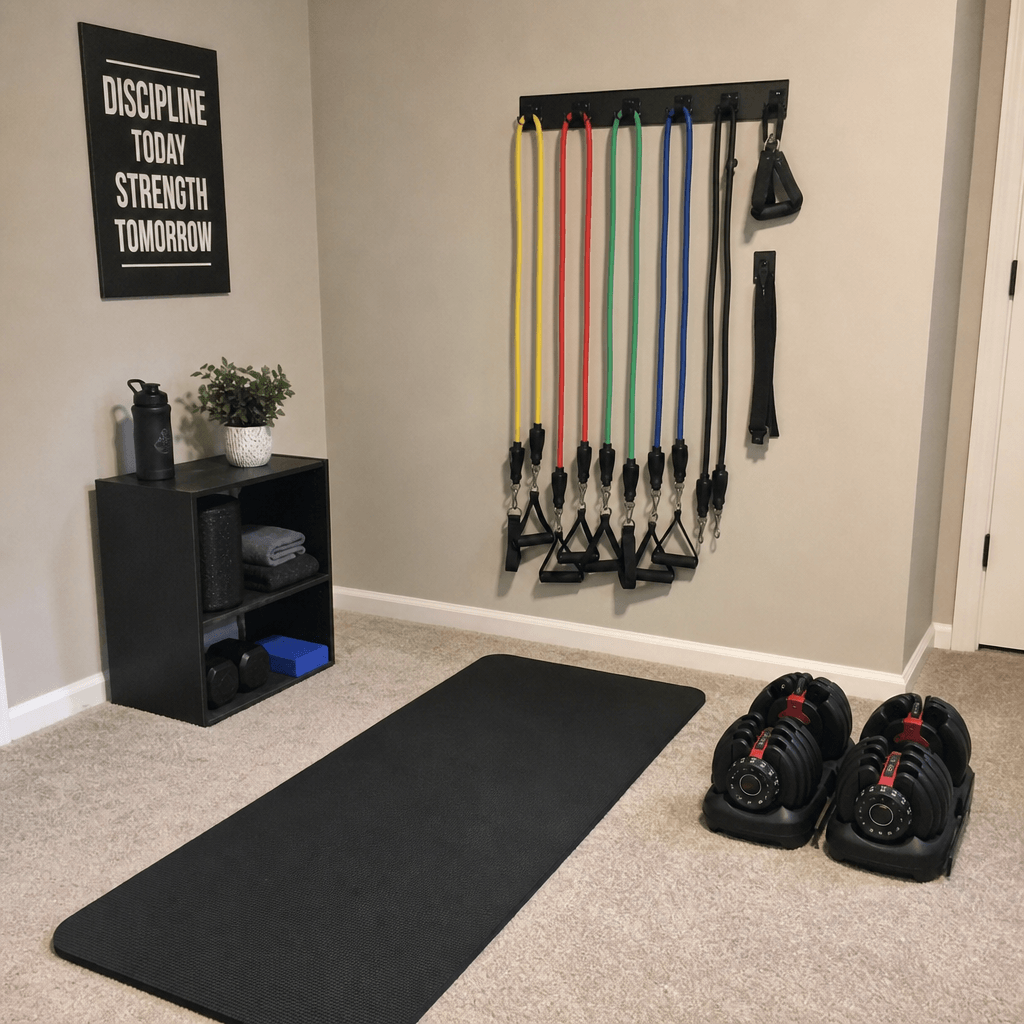
You can make progress with no equipment, but a few inexpensive tools can expand your options. Resistance bands are especially useful for rows, pulldowns, face pulls, curls, triceps work, and assisted stretching. Adjustable dumbbells, a pull-up bar, or a weighted vest can also be helpful if they fit your budget and space.
Equipment should solve a problem, not become a distraction. If you are consistent with the basics, even a small amount of gear can go a long way.
Nutrition supports the muscle you are trying to build
Training creates the signal for growth, but nutrition provides the materials. If you train hard while under-eating, progress may be slow. You do not need a complicated diet, but you do need enough total food and enough protein.
A practical approach is to include a protein source at each meal. Examples include eggs, Greek yogurt, poultry, fish, lean meat, tofu, tempeh, beans, lentils, cottage cheese, or protein powder if you use it. Pair protein with carbohydrates for training energy and fats for overall dietary balance.
For many people, the simplest nutrition habits are the most effective:
Eat regular meals instead of accidentally skipping food all day.
Include protein in breakfast, lunch, and dinner.
Add fruits and vegetables for fiber, micronutrients, and meal quality.
Use carbohydrates around workouts if energy is low.
Drink enough water, especially if you sweat heavily.
Avoid extreme restriction if your goal is to gain muscle.
If you are trying to lose fat and gain muscle at the same time, progress can still happen, especially if you are newer to training. However, aggressive dieting can make it harder to train well and recover. A moderate, sustainable approach usually works better than chasing fast changes.
Recovery turns effort into progress
It is easy to think more workouts automatically mean more results. In reality, muscle growth depends on the balance between stress and recovery. If you train hard but sleep poorly, eat inconsistently, and never take rest days, your performance may stall.
Sleep is one of the most underrated parts of building muscle at home. A well-designed program should leave you feeling challenged, not crushed. Soreness can happen, especially when you start or change exercises, but soreness is not the goal.
Pay attention to your performance. If reps, energy, and motivation are dropping for several workouts in a row, you may need more recovery. That could mean taking an extra rest day, reducing sets for a week, or improving sleep and food intake.
Common mistakes that slow home muscle gains
Home training is convenient, but convenience can also lead to casual effort. The best results usually come from treating home workouts with the same respect you would give gym sessions. That means planning, tracking, and focusing during the work.
Here are the mistakes to avoid:
Doing only random workouts. Variety can be fun, but muscle growth needs repeated practice and progression.
Skipping back and leg training. Push-ups are useful, but they are not a complete program.
Rushing every rep. Fast, sloppy reps reduce tension and increase the chance of poor form.
Changing exercises too often. If you change everything weekly, it is hard to measure progress.
Training too easy. Comfortable sets rarely create much growth.
Training too hard every day. Constant max-effort sessions can interfere with recovery.
Ignoring nutrition. Muscle gain is harder when protein and total food intake are consistently too low.
Expecting instant results. Visible change takes time, even when your plan is working.
A useful habit is to keep a simple workout log. Write down the exercise, sets, reps, variation, and any added load. If you performed three sets of 10 push-ups last week and three sets of 12 this week with the same form, you have evidence of progress.
A practical checklist for building muscle at home
Use this checklist to keep your plan grounded. You do not need to do everything perfectly, but these basics should be present most weeks.
Train three to four times per week with a plan you can repeat.
Work all major muscle groups instead of only the exercises you enjoy most.
Use challenging sets that end near, but not always at, failure.
Progress gradually by adding reps, sets, load, tempo, pauses, or harder variations.
Prioritize good form over chasing numbers.
Eat enough protein across the day.
Sleep and rest enough to perform well in your next workout.
Track your sessions so you know what is improving.
Stay patient and judge progress over months, not days.
If you can check most of these boxes consistently, you are doing the main things that matter.
How long does it take to see results?
Most people notice strength improvements before they see major visual changes. In the first few weeks, you may feel more coordinated, more stable, and better able to complete reps that used to feel difficult. Visible muscle gain usually takes longer and depends on your starting point, training quality, nutrition, sleep, genetics, and consistency.
Instead of relying only on the mirror, track multiple signs of progress. Are you doing more reps with the same exercise? Has a harder variation become possible? Do your clothes fit differently? Are your measurements changing? These signals can show that your home routine is working even before dramatic visual changes appear.
Progress is rarely perfectly linear. Some weeks will feel strong, and others will feel flat. The goal is to keep the long-term trend moving forward.
FAQ
Can I build muscle at home?
Yes. If you have ever searched “Can I build muscle at home?” the direct answer is yes, provided your workouts are challenging, progressive, and supported by good nutrition and recovery. You may need to be creative with exercise variations and resistance, but a gym is not required.
Do I need weights to build muscle at home?
No, but weights can help. Bodyweight exercises, resistance bands, and loaded household items can all create resistance. Over time, adding adjustable dumbbells, a pull-up bar, or a weighted vest may make progression easier.
Are push-ups enough for upper-body muscle?
Push-ups are excellent for the chest, shoulders, and triceps, but they do not train the back well. Add rows, band pull-aparts, pull-ups, or other pulling movements to build a more balanced upper body.
How many days per week should I train?
Three days per week is a strong starting point for most people. Four days can also work well if you recover properly. More is not always better if it reduces workout quality or makes you inconsistent.
Should I do cardio if I want to gain muscle?
Cardio can support general fitness and health, but it should not interfere with strength training recovery. If muscle gain is the priority, keep resistance training at the center of your plan and use cardio in a way that still allows you to perform well.
What if I only have 20 minutes?
A short workout can still be useful if it is focused. Choose three to five exercises, train them with intent, and minimize distractions. A 20-minute session done consistently is better than a perfect 90-minute plan you rarely complete.
The takeaway
You can build muscle at home with a clear plan, consistent effort, and progressive resistance training. Bodyweight exercises are a strong starting point, and simple tools like bands, a backpack, or dumbbells can help you keep progressing. Focus on challenging sets, balanced training, enough protein, and steady recovery, and your home workouts can become a serious path to strength and muscle growth.