If you want to build muscle, improve your fitness, or become stronger, choosing the right exercises is a great place to start. The best strength training exercises target major muscle groups, help you develop balanced strength, and can be adjusted to match your fitness level.
You don’t need an advanced gym routine to see progress. Exercises such as squats, push-ups, lunges, rows, deadlifts, and planks can provide an effective foundation for beginners and experienced exercisers alike.
The key is to use proper technique, choose an appropriate level of resistance, and gradually increase the challenge as your strength improves. Whether you prefer training at home or in a gym, a well-planned strength routine can help you work toward better movement, muscle development, and overall fitness.
What Are the Best Strength Training Exercises?
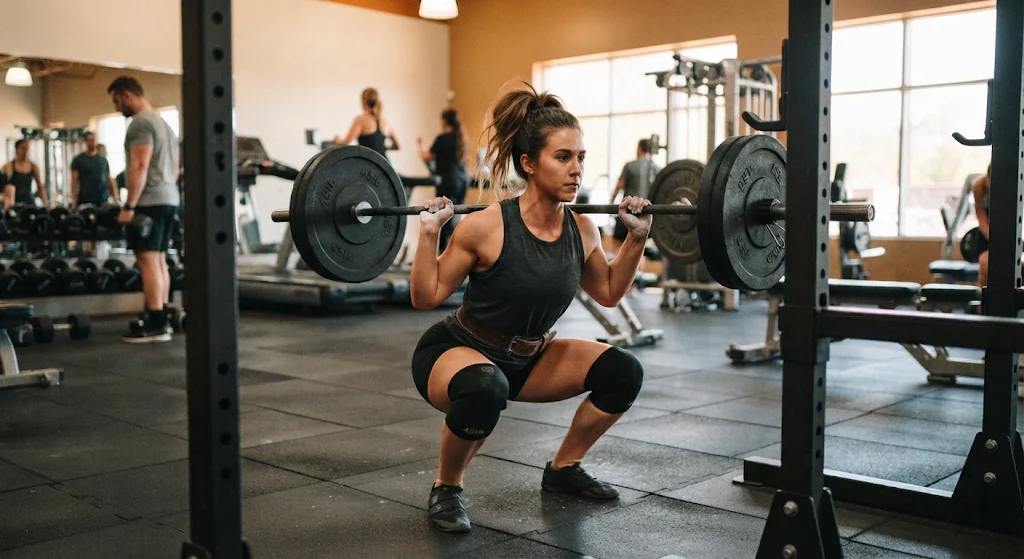
1. Squats
Main muscles worked: Quadriceps, glutes, hamstrings, and core.
Squats are one of the best lower-body strength exercises because they develop the muscles used for everyday movements such as sitting, standing, and climbing stairs.
How to perform a squat:
Stand with your feet about shoulder-width apart.
Keep your chest lifted and your core engaged.
Bend your knees and push your hips back as if sitting in a chair.
Lower yourself as far as you can comfortably maintain good form.
Press through your feet to return to standing.
Beginners can start with bodyweight squats or use a chair for support. As you become stronger, try goblet squats or gradually add resistance.
2. Push-Ups
Main muscles worked: Chest, shoulders, triceps, and core.
Push-ups are an effective upper-body exercise that requires little or no equipment. They also challenge your core because you need to keep your body stable throughout the movement.
How to perform a push-up:
Start in a plank position with your hands slightly wider than shoulder-width.
Keep your body aligned from your head to your heels.
Bend your elbows and lower your chest toward the floor.
Push through your hands to return to the starting position.
If a standard push-up is too difficult, begin with wall push-ups or incline push-ups using a sturdy elevated surface.
For more exercise ideas that don’t require a full gym setup, check out our guide to the best bodyweight workouts you can do at home.
3. Lunges
Main muscles worked: Quadriceps, glutes, hamstrings, and calves.
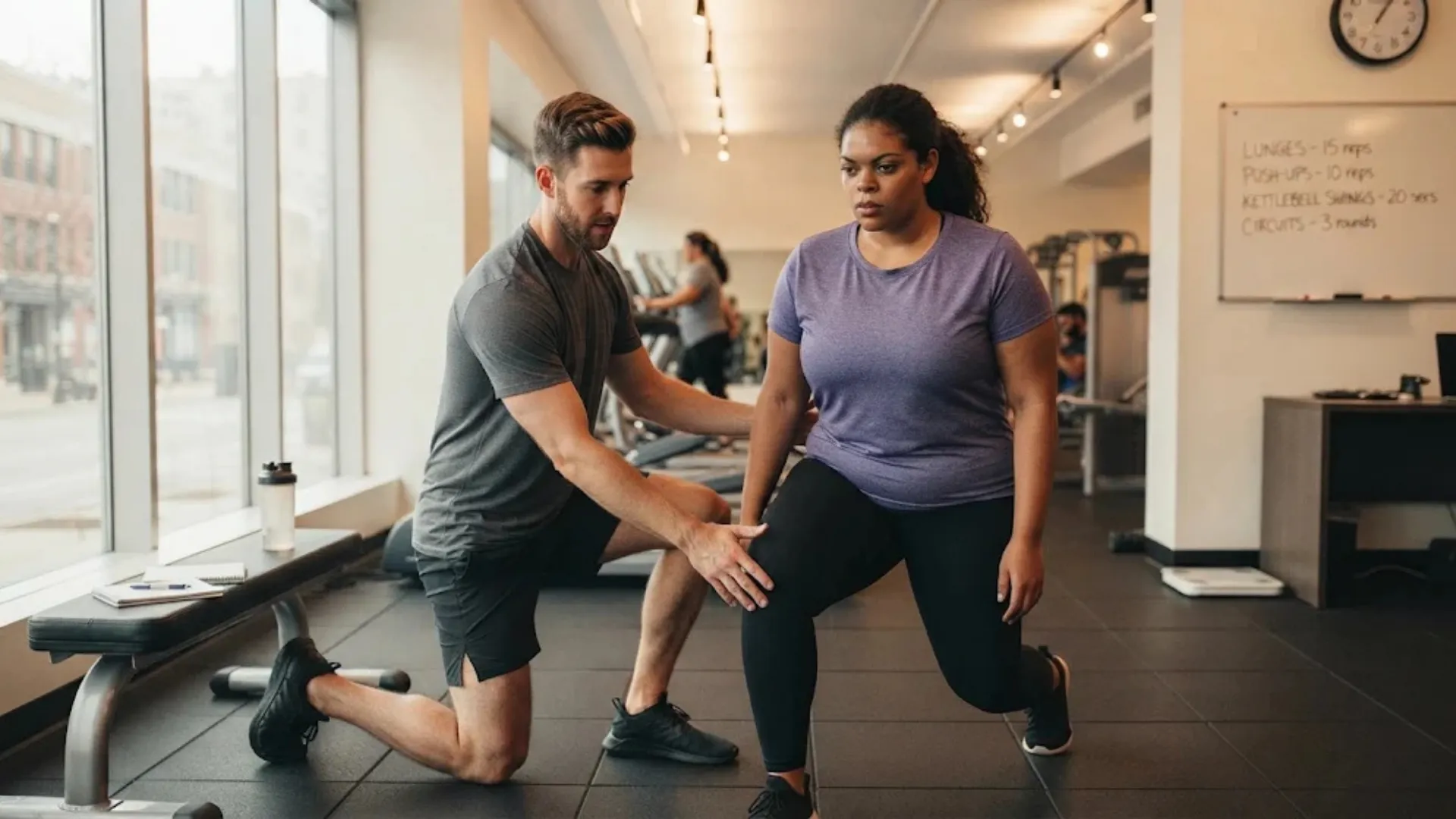
Lunges help develop lower-body strength while challenging your balance and coordination. Because each leg works independently, they can also help you identify differences in strength between your sides.
How to perform a forward lunge:
Stand upright with your feet hip-width apart.
Take a comfortable step forward.
Bend both knees while keeping your torso upright.
Lower yourself until your front thigh approaches a parallel position, if comfortable.
Push through your front foot to return to standing.
Repeat with the opposite leg.
Start with bodyweight lunges before adding dumbbells. If balance is a concern, use a stable surface for support.
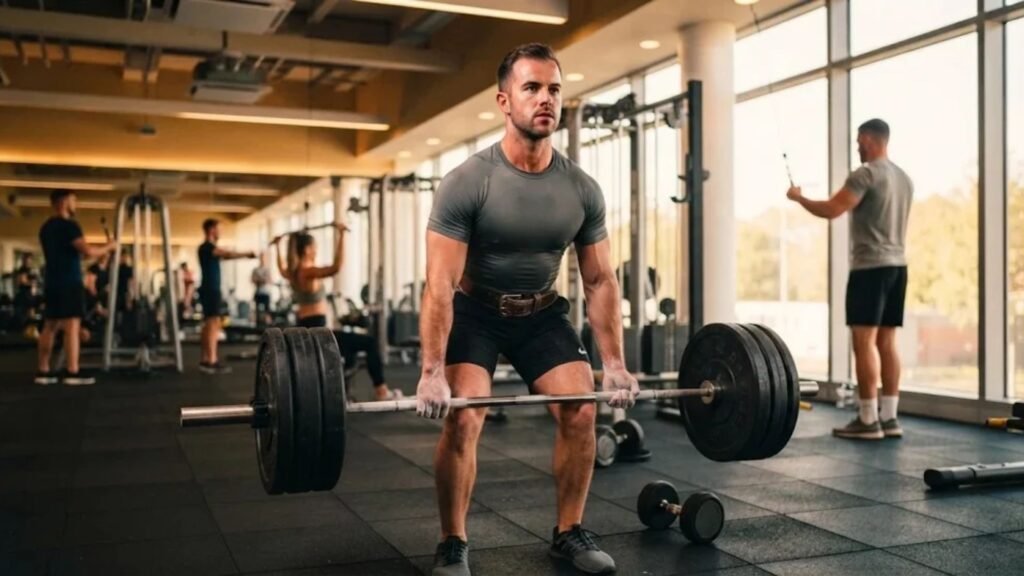
4. Deadlifts
Main muscles worked: Hamstrings, glutes, back, and core.
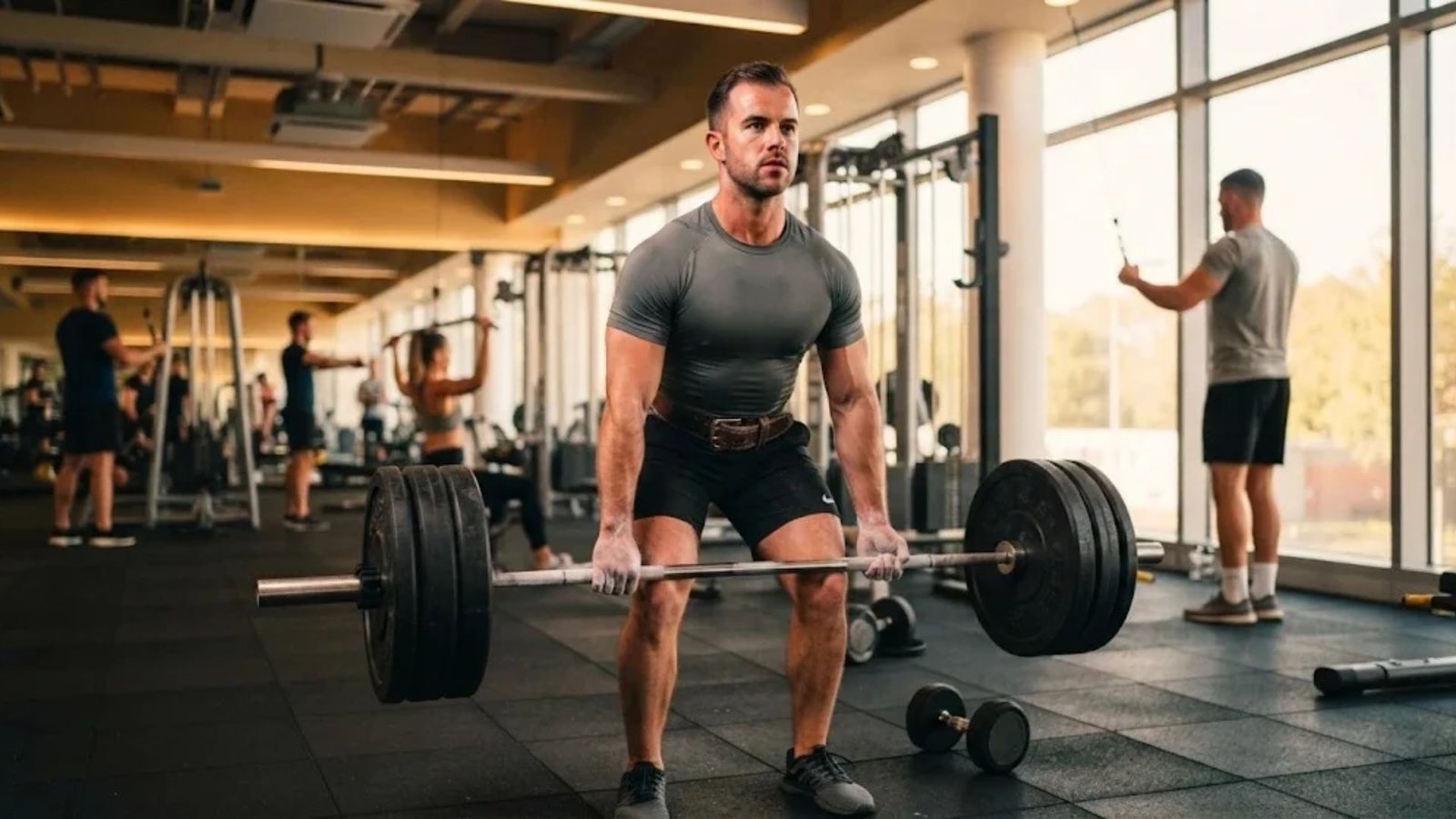
Deadlifts develop strength throughout the posterior chain, which includes the muscles along the back of your body. They also teach you how to lift objects using controlled hip movement.
How to perform a basic dumbbell deadlift:
Stand with your feet hip-width apart and hold dumbbells in front of your thighs.
Keep your back in a comfortable neutral position.
Push your hips backward while lowering the weights along your legs.
Stop when you feel a stretch in your hamstrings without rounding your back.
Drive your hips forward to return to standing.
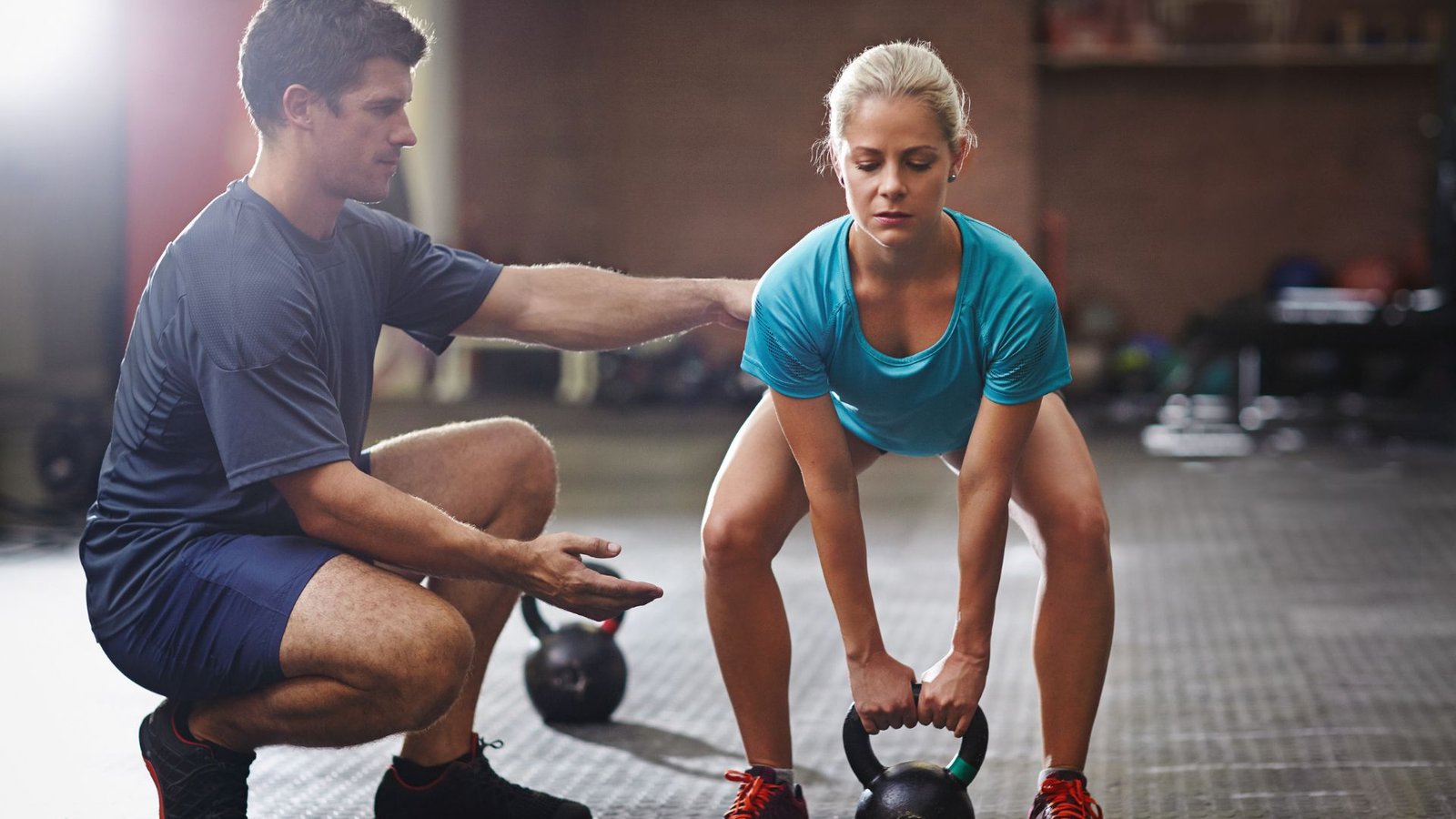
Beginners should learn the hip-hinge movement with light resistance before progressing to heavier deadlifts.
5. Rows
Main muscles worked: Upper back, lats, rear shoulders, and biceps.
Rows strengthen the pulling muscles of your upper body. They’re particularly useful for balancing routines that include pushing exercises such as push-ups and chest presses.
How to perform a dumbbell row:
Hold a dumbbell in one hand.
Support yourself with your opposite hand on a stable bench or surface.
Keep your back controlled and your torso steady.
Pull the dumbbell toward your hip.
Lower it slowly and repeat.
You can also perform rows with resistance bands or a cable machine. Choose a resistance that allows you to move without twisting your body.
6. Overhead Shoulder Press
Main muscles worked: Shoulders, triceps, and upper chest.
The overhead press develops upper-body strength and helps improve your ability to push objects overhead.
How to perform a dumbbell shoulder press:
Hold a dumbbell in each hand at shoulder height.
Keep your feet planted and your core engaged.
Press the dumbbells overhead without forcing your lower back to arch.
Lower the weights slowly to shoulder height.
Repeat with controlled movement.
Start with light dumbbells and focus on maintaining good posture throughout each repetition.
7. Planks
Main muscles worked: Abdominals, obliques, shoulders, and other stabilizing muscles.
Planks strengthen your core by challenging your ability to maintain a stable body position. A strong core supports posture and helps you control movements during other strength exercises.
How to perform a forearm plank:
Place your forearms on the floor with your elbows below your shoulders.
Extend your legs behind you.
Keep your body in a straight line.
Tighten your abdominal muscles and breathe normally.
Hold the position while maintaining good form.
Beginners can perform a modified plank with their knees on the floor and gradually work toward longer holds.
How Do You Choose the Right Strength Training Exercises?
The best exercises for you depend on your fitness level, goals, available equipment, and any physical limitations.
A balanced routine should cover the main movement patterns rather than focusing only on one muscle group.
Consider including:
Squatting movements: Squats and split squats for lower-body strength.
Hip-hinge movements: Deadlifts and hip bridges for the glutes and hamstrings.
Pushing movements: Push-ups and shoulder presses for the chest, shoulders, and triceps.
Pulling movements: Dumbbell rows and resistance band rows for the back and biceps.
Core exercises: Planks and dead bugs for stability.
If you’re training at home, bodyweight exercises and resistance bands can provide a useful starting point. Our article on building muscle at home with effective resistance training explains how to make simple exercises more challenging as you progress.
How Many Sets and Repetitions Should You Do?
The number of sets and repetitions depends on your training experience and goals.
For general strength and fitness, a practical starting point is:
| Training level | Sets | Repetitions |
|---|---|---|
| Beginner | 2–3 | 8–12 |
| Intermediate | 3–4 | 8–12 |
| Experienced | 3–5 | Varies by exercise and goal |
Choose a weight that makes the final repetitions challenging while allowing you to maintain proper technique. You don’t need to lift to complete failure on every set.
Rest between sets long enough to perform the next set with good form. Larger, demanding exercises may require longer breaks than smaller movements.
As your fitness improves, you can gradually increase resistance, repetitions, or sets.
How Can You Keep Getting Stronger?
Your muscles adapt to the demands you place on them. If you want to continue improving, your workouts should become gradually more challenging.
This is known as progressive overload.
You can apply it by:
Increasing the weight when your current load becomes manageable.
Adding repetitions while maintaining good technique.
Performing an additional set when appropriate.
Improving your range of motion and movement control.
Choosing a more challenging exercise variation.
For a more detailed explanation, read our guide to progressive overload.
Avoid increasing everything at once. Small adjustments make it easier to track your progress and manage recovery.
How Often Should You Do Strength Training?
Many adults can benefit from strength training at least two days per week, working all major muscle groups.
Beginners may start with two full-body sessions on non-consecutive days. As they become more comfortable, they can progress to three sessions per week or use an upper-body and lower-body training split.
For example:
Monday: Full-body strength training
Tuesday: Walking or light cardio
Wednesday: Rest or gentle activity
Thursday: Full-body strength training
Friday: Walking or another enjoyable activity
Saturday: Optional strength or mobility session
Sunday: Rest
Your schedule should allow enough recovery between demanding workouts. Consistency and appropriate training effort matter more than exercising every day.
Does Strength Training Help With Weight Loss?
Yes. Strength training can support weight management by helping you maintain or build muscle while reducing body fat. It also improves strength and physical function, making everyday activities easier.
Building muscle may contribute to changes in resting energy expenditure, although the effect varies and should not be treated as a shortcut to weight loss.
For the best results, combine resistance training with regular movement, balanced nutrition, and adequate recovery.
You can learn more in our article, Does Strength Training Improve Metabolism?.
Common Strength Training Mistakes to Avoid
Even good exercises can become less effective when performed with poor technique or an unsuitable training schedule.
Watch out for these common mistakes:
Lifting too much weight: Heavy resistance is not useful if you cannot control the movement.
Skipping warm-ups: Prepare your body with a few minutes of light activity and movement-specific warm-up sets.
Training only favorite muscle groups: A balanced routine should work your entire body.
Ignoring recovery: Muscles need time to adapt between demanding workouts.
Changing exercises too often: Repeating key movements makes it easier to measure improvement.
Neglecting progression: Gradually increase the challenge as your strength develops.
If an exercise causes sharp or persistent pain, stop and seek appropriate guidance rather than pushing through it.
Frequently Asked Questions
What is the single best strength training exercise?
There isn't one exercise that works every muscle group. Squats, deadlifts, push-ups, and rows are excellent choices because they involve several muscles and movement patterns.
Can I do strength training at home without equipment?
Yes. Bodyweight exercises such as squats, push-ups, lunges, and planks can help build strength. Resistance bands and dumbbells provide additional options as you progress.
How long should a strength training workout last?
Many people can complete a productive session in approximately 30–60 minutes. The right duration depends on the number of exercises, sets, rest periods, and your fitness goals.
Should beginners lift weights or start with bodyweight exercises?
Both can work. Beginners can start with bodyweight exercises to learn movement patterns, then introduce light dumbbells, resistance bands, or machines as their technique and confidence improve.
How long does it take to see results from strength training?
Some people notice improvements in strength and exercise performance within a few weeks. Visible muscle changes generally take longer and depend on training consistency, nutrition, recovery, and individual factors.
Build Strength With a Training Plan That Fits Your Goals
The best strength training exercises are the ones that help you work your major muscle groups safely and consistently. Squats, push-ups, lunges, deadlifts, rows, shoulder presses, and planks provide a strong foundation for developing full-body strength.
Start with exercises that match your current ability, focus on proper technique, and gradually increase the challenge as you improve. You don’t need complicated workouts to make progress.
At San Rafael Personal Training, personalized coaching can help you choose suitable exercises, improve your technique, and follow a routine built around your fitness goals. Contact us to discuss a strength training program that fits your lifestyle and helps you become stronger.