
If you’re working toward bigger muscles, improved strength, or a healthier body composition, your food choices matter just as much as your workouts. Knowing what foods help build muscle can make it easier to support your training, recover properly, and make steady progress.
Your body needs enough protein to repair and build muscle tissue, carbohydrates to provide workout energy, and healthy fats to support normal body functions. You also need sufficient overall calories and a balanced diet that provides essential vitamins and minerals.
You don’t need expensive supplements or complicated meal plans to get started. Everyday foods such as eggs, chicken, fish, Greek yogurt, beans, rice, oats, nuts, and vegetables can provide the nutrients your body needs.
At San Rafael Personal Training, combining appropriate nutrition with a consistent strength training routine can help you work toward your fitness goals.
What Are the Best Foods for Building Muscle?
The best muscle-building foods provide protein, carbohydrates, healthy fats, and important micronutrients. Here are some practical options to include in your meals.
1. Eggs
Eggs are an excellent protein source and contain essential amino acids that support muscle repair and growth. They also provide nutrients such as vitamin B12 and choline.
You can prepare eggs in several ways:
Boiled eggs for a convenient snack
Scrambled eggs with vegetables
Omelets with spinach and cheese
Eggs served with whole-grain toast
Eggs are easy to prepare and can be included in breakfast, lunch, or dinner.
2. Chicken Breast
Chicken breast is a popular choice for people building muscle because it provides plenty of protein without a large amount of fat.
It’s also easy to combine with other nutritious foods. Try serving grilled chicken with brown rice, sweet potatoes, vegetables, or a fresh salad.
If you prefer variety, turkey and other lean poultry options can also contribute to your daily protein intake.
3. Fish and Seafood
Fish provides high-quality protein, while certain varieties also contain omega-3 fatty acids.
Good options include:
Salmon
Tuna
Sardines
Cod
Trout
Shrimp
Salmon is particularly useful because it provides protein and omega-3 fats. Tuna and cod are leaner choices that can work well in different meals.
Try including fish in your weekly meal rotation to add variety to your protein sources.
4. Greek Yogurt
Greek yogurt is a convenient protein-rich food that works well for breakfast or snacks. It also provides calcium, which supports bone health.
Choose plain Greek yogurt when possible, especially if you want to manage added sugar.
You can combine it with:
Fresh berries
Bananas
Oats
Chia seeds
Nuts
A small amount of honey
This combination provides protein, carbohydrates, fiber, and healthy fats.
5. Lean Beef
Lean beef provides protein, iron, zinc, and vitamin B12. These nutrients support normal muscle function, oxygen transport, and overall health.
Choose leaner cuts and prepare them by grilling, baking, or pan-searing with a moderate amount of oil.
Pair beef with potatoes, rice, or vegetables to create a balanced meal.
6. Beans and Lentils
Beans and lentils are useful plant-based protein sources. They also provide carbohydrates and fiber, making them filling additions to meals.
Some good choices include:
Black beans
Chickpeas
Kidney beans
Green lentils
Red lentils
Soybeans
Although individual plant protein sources can differ in their amino acid profiles, eating a variety of protein-rich plant foods throughout the day can help support your nutritional needs.
7. Nuts and Seeds
Almonds, walnuts, peanuts, pumpkin seeds, and chia seeds provide healthy fats, minerals, and some protein.
They’re calorie-dense, which can be helpful if you’re trying to meet higher energy needs while building muscle.
However, portions matter. A small handful can be a useful snack, while large amounts can add calories quickly.
8. Oats and Whole Grains
Carbohydrates are important for fueling workouts and supporting recovery. Oats, brown rice, quinoa, whole-grain bread, and whole-wheat pasta can help provide the energy needed for regular strength training.
Oats are especially convenient for breakfast. Combine them with Greek yogurt, milk, fruit, or nuts for a meal that provides a mix of protein and carbohydrates.
9. Milk and Dairy Products
Milk provides protein, carbohydrates, calcium, and other nutrients. It contains two types of protein: whey and casein.
Other useful dairy options include cottage cheese, plain yogurt, and cheese. If you don’t tolerate dairy, fortified soy milk and other suitable alternatives can help provide nutrients, although their protein content varies.
10. Fruits and Vegetables
Fruits and vegetables may not be the first foods people think about when building muscle, but they’re an important part of a balanced diet.
They provide vitamins, minerals, fiber, and antioxidants that support general health.
Good options include:
Bananas
Berries
Oranges
Spinach
Broccoli
Sweet potatoes
Bell peppers
Carrots
Include different colors and varieties throughout the week rather than relying on just one or two options.
How Much Protein Do You Need to Build Muscle?
Protein provides amino acids that your body uses to repair and build muscle tissue after exercise.
For adults who regularly participate in strength training, a commonly used daily protein range is approximately 1.4–2.0 grams per kilogram of body weight. Your individual needs may vary depending on your training, goals, overall diet, and health.
For example, someone weighing 70 kilograms might aim for approximately 98–140 grams of protein per day.
You don’t have to consume all your protein in one meal. Spreading it across breakfast, lunch, dinner, and snacks can make your daily target easier to reach.
For additional guidance on how training and nutrition work together, read our article on building muscle at home.
Are Carbohydrates Important for Muscle Growth?
Yes. Protein often receives the most attention, but carbohydrates are also important when building muscle.
Carbohydrates provide energy for exercise and help replenish glycogen, which your muscles use during physical activity. Eating enough carbohydrates can help you maintain workout performance, particularly during demanding training sessions.
Some good carbohydrate sources include:
Oatmeal
Brown rice
Sweet potatoes
Whole-grain bread
Quinoa
Bananas
Beans
Whole-wheat pasta
You don’t need to eliminate rice, bread, or pasta to build muscle. Instead, choose portions that support your activity level and overall nutrition goals.
What Foods Should You Eat Before and After a Workout?
Meal timing doesn’t need to be complicated, but choosing appropriate foods around your workouts can help you feel energized and support recovery.
Before Your Workout
A pre-workout meal or snack can provide energy for strength training.
Try these combinations:
Banana with Greek yogurt
Oatmeal with milk
Whole-grain toast with eggs
Rice with chicken
Fruit with a small serving of nuts
If you’re eating a larger meal, allow enough time to digest comfortably before exercising. A smaller snack may be more suitable if you’re training soon.
After Your Workout
After training, include protein and carbohydrates to support muscle repair and replenish energy.
Good post-workout meals include:
Grilled chicken with rice and vegetables
Salmon with sweet potatoes
Eggs with whole-grain toast
Greek yogurt with berries and oats
Tofu with rice and mixed vegetables
You don’t need an expensive recovery shake immediately after every workout. A balanced meal that fits your daily nutrition needs can do the job.
How Can You Combine Nutrition and Training to Build Muscle?
Eating the right foods is only one part of muscle development. Your body also needs consistent resistance training and enough recovery time.
1. Follow a Consistent Strength Training Routine
Train your major muscle groups regularly using exercises such as squats, rows, presses, lunges, and deadlifts.
Choose a schedule that fits your experience and allows enough recovery between demanding sessions.
2. Apply Progressive Overload
As your strength improves, gradually increase the challenge by adding resistance, performing more repetitions, or improving your exercise technique.
Our guide to progressive overload explains how to apply this principle without making unnecessary changes to your routine.
3. Eat Enough to Support Your Goals
Building muscle can be difficult if you consistently eat too little. Make sure your meals provide sufficient protein, carbohydrates, fats, and overall energy.
If your goal is to build muscle while losing body fat, your nutrition plan may need to be adjusted to balance muscle preservation and fat loss.
4. Prioritize Sleep and Recovery
Your muscles need time to recover after challenging workouts. Aim for consistent sleep, schedule rest days, and avoid training the same muscle groups intensely without adequate recovery.
For more information about the relationship between resistance training and metabolism, read our article on how strength training improves metabolism.
5. Get Guidance When You Need It
If you’re unsure how much to eat or how to organize your workouts, working with a qualified trainer can help you create a more structured approach.
Our guide to building muscle with online coaching explains how remote coaching can support training plans, progress tracking, and nutrition guidance.
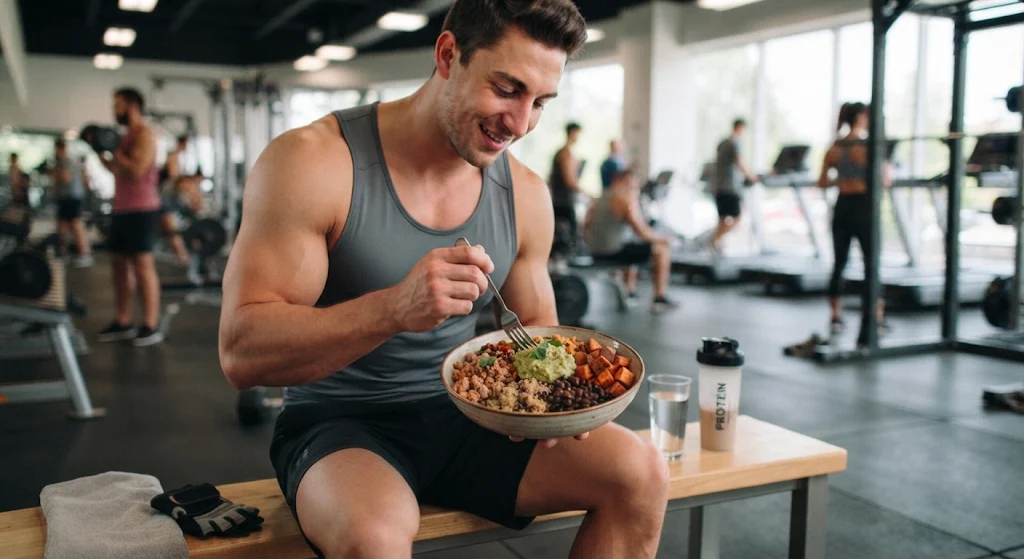
Sample One-Day Meal Plan for Muscle Growth
Here’s an example of how you can combine different foods throughout the day. Adjust the portions based on your body size, activity level, appetite, and nutritional needs.
| Meal | Example foods |
|---|---|
| Breakfast | Eggs, oatmeal, and a banana |
| Morning snack | Greek yogurt with berries |
| Lunch | Grilled chicken, brown rice, and vegetables |
| Afternoon snack | Peanut butter toast or a protein-rich snack |
| Dinner | Salmon, sweet potato, and broccoli |
| Evening snack | Cottage cheese or milk, if needed |
This is a general example rather than a personalized meal prescription. Your total calorie and protein needs will determine the appropriate portions.
Frequently Asked Questions
What is the best food for building muscle quickly?
There isn't one food that builds muscle on its own. Eggs, chicken, fish, Greek yogurt, lean beef, beans, and soy foods provide protein that supports muscle repair and growth. Combine them with sufficient calories and consistent strength training.
Can I build muscle without protein supplements?
Yes. You can get enough protein from everyday foods such as eggs, chicken, fish, dairy, beans, lentils, and tofu. Protein powder is a convenient option, but it isn't required.
Should I eat more to build muscle?
Many people benefit from eating enough to meet their energy needs, and some may need a modest calorie surplus to support muscle growth. The right amount depends on your training experience, body composition goals, and activity level.
Are carbohydrates bad for muscle building?
No. Carbohydrates provide energy for training and help replenish muscle glycogen. Whole grains, fruit, rice, potatoes, and oats can all be part of a muscle-building diet.
How long does it take to build muscle through diet and exercise?
Muscle development takes time. Some people notice improvements in strength within a few weeks, while visible muscle changes generally take longer. Results depend on training consistency, nutrition, recovery, genetics, and experience.
Build Muscle With the Right Nutrition and Training Plan
So, what foods help build muscle? Protein-rich options such as eggs, chicken, fish, Greek yogurt, lean beef, beans, and lentils provide important building blocks for muscle development. Carbohydrates supply workout energy, while healthy fats, fruits, and vegetables help create a balanced diet.
Remember that nutrition and exercise work together. Eat enough to support your goals, follow a consistent strength training routine, and give your body time to recover.
At San Rafael Personal Training, personalized fitness guidance can help you develop a training routine that works alongside your nutrition goals. Contact us to discuss a plan that supports your strength, muscle-building, and overall fitness goals.